Why Are Hemp THC Drinks Legal When Marijuana Isn't?
Robert Dunn, Co-Founder and Chief Operating Officer, Sunny Bev LLC. August 20, 2026.
Key points The 2018 Farm Bill (P.L. 115-334) legalized hemp by defining it as cannabis containing no more than 0.3 percent delta-9 THC on a dry-weight basis, removing it from the Controlled Substances Act. Because 0.3 percent is a concentration by weight and not a milligram cap, a 12-ounce beverage weighing roughly 355 grams can contain several milligrams of hemp-derived delta-9 THC while remaining far below the threshold. Adult-use marijuana remains a Schedule I controlled substance under federal law. FDA-approved marijuana drug products and state-licensed medical marijuana moved to Schedule III in April 2026. A new federal definition, enacted in November 2025, caps hemp products at 0.4 milligrams of total THC per container and measures total THC rather than delta-9 alone. It was scheduled to take effect November 12, 2026. On August 8, 2026 the Senate passed a funding bill that would delay most of that change to December 11, 2026. It is not law until the House passes it and the President signs it. The Lawful Hemp Protection Act (H.R. 9830), introduced July 22, 2026, would replace the ban with a regulatory framework. It is the leading vehicle among several. What made hemp-derived THC beverages federally legal?
One sentence in the 2018 Farm Bill. The Agriculture Improvement Act of 2018 defined hemp as the cannabis plant, and any part or derivative of it, containing no more than 0.3 percent delta-9 THC on a dry-weight basis, and it removed hemp from the federal Controlled Substances Act. Cannabis above that concentration remained marijuana, a Schedule I controlled substance. Congress wrote that definition with fiber, grain, and CBD in mind. It did not anticipate that the same sentence would create a national market for intoxicating hemp-derived THC products, but the words on the page did exactly that.
The result is a legal line that has nothing to do with how a product makes anyone feel and everything to do with a chemistry measurement. Hemp and marijuana are the same plant species, Cannabis sativa L. The only federal difference between them is which side of 0.3 percent delta-9 THC the material falls on.
How can a drink contain THC and still count as hemp?
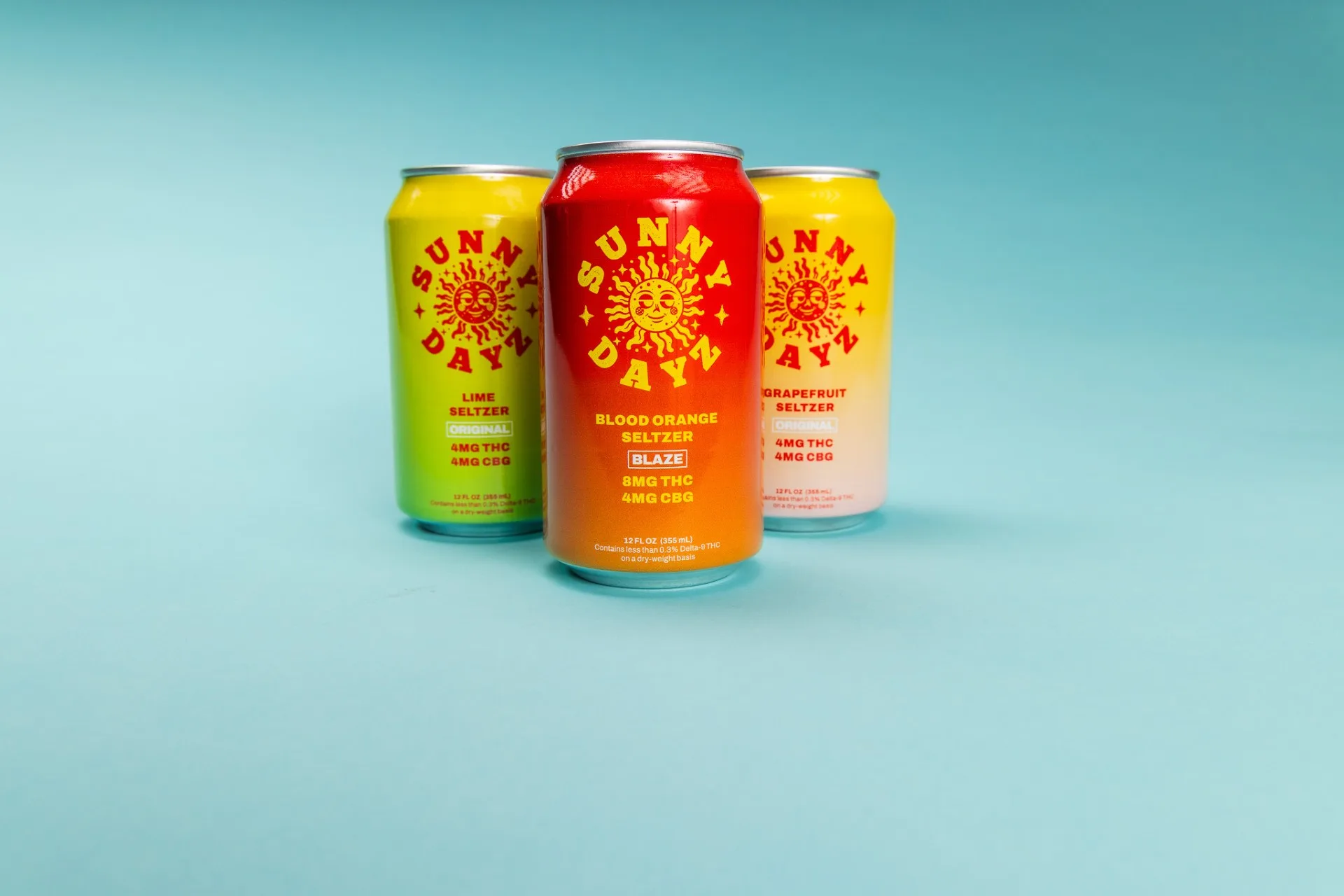
Because 0.3 percent is a concentration, not a milligram limit, and beverages are heavy. A 12-ounce can of sparkling water weighs roughly 355 grams, which is 355,000 milligrams. Three tenths of one percent of that is more than 1,000 milligrams of delta-9 THC. A hemp-derived THC beverage containing 5 milligrams of delta-9 THC sits at roughly 0.0014 percent by weight, hundreds of times below the federal threshold.
That is the math that put hemp-derived THC beverages on shelves in states that never legalized marijuana. The delta-9 THC in a compliant beverage is real THC, chemically identical to the delta-9 THC in a dispensary product. It is federally lawful because of the concentration of the product it arrives in, not because it is a different substance.
Is marijuana still Schedule I?
Partly. This changed in 2026 and the answer now depends on which marijuana you mean.
In April 2026, a final order signed by the Acting Attorney General moved two categories from Schedule I to Schedule III: marijuana contained in an FDA-approved drug product, and marijuana subject to a qualifying state medical marijuana license. Adult-use marijuana, meaning the recreational products sold in states that license them, remains Schedule I. A DEA administrative hearing on whether to reschedule marijuana more broadly ran from June 29 to July 15, 2026, and a final rule on that question has not issued.
So the comparison in this article's title is really between hemp-derived THC beverages and adult-use marijuana. That is still the comparison most people are making when they ask why one is on a grocery shelf and the other is not.
Is this a loophole?
Yes, and I say that as someone who built a company on it. Congress drafted a definition for an agricultural commodity, and an industry, mine, read it closely and built an intoxicating products market inside it. Some of that market became exactly what you would expect from a legal gray zone: unregulated synthetic delta-8 products at gas stations, packaging that the FDA formally warned mimics children's snack brands, and online sales with checkbox age verification.
Calling it a loophole is not a concession that the products should disappear. It is a concession that the legal foundation was an accident, and accidental legal foundations do not hold. An industry built on a drafting quirk was always going to face one of two futures: real regulation or prohibition. In November 2025, Congress chose prohibition.
Does federal legality mean hemp-derived THC beverages are legal in every state?
No. The 2018 Farm Bill set the federal definition, but states regulate hemp-derived THC products within their own borders, and the rules vary widely. Some states allow hemp-derived THC beverages with their own serving caps, testing rules, and age limits. Some states restrict them to licensed channels. Some states prohibit intoxicating hemp products entirely. Anyone selling or buying these products needs to check the law of the specific state, and nothing in this article is legal advice.
That patchwork is itself part of the argument for a federal framework. Fifty different definitions of the same can is not a system. It is an invitation for the least careful operators to shop for the weakest rules.
What changes on November 12, 2026?
Less than it looked like a month ago, and the date may not hold.
A provision enacted in November 2025, as part of the spending law that reopened the government after that year's shutdown, rewrites the federal definition of hemp. The new definition caps hemp products at 0.4 milligrams of total THC per container, and it measures total THC including THCa and delta-8 rather than delta-9 alone. That second change matters as much as the milligram cap, because the entire current market is built on a delta-9 measurement. The U.S. Hemp Roundtable estimates the change would wipe out roughly 95 percent of the current hemp marketplace, including compliant low-dose beverages.
That change was scheduled for November 12, 2026. On August 8, 2026, the Senate rejected an amendment that would have kept the original date and then passed a continuing resolution containing language delaying most of the new restrictions to December 11, 2026. Synthetic cannabinoids that cannot be produced naturally by the plant are still recriminalized on November 12 under that language.
The delay is not law yet. The House has to pass the same bill and the President has to sign it, and the House is expected to take it up in September, when opponents may try again to strip the hemp language out. Anyone planning inventory around December 11 rather than November 12 is planning around a bill that has cleared one chamber.
Will Congress replace the ban with regulation?
Several bills are trying. The most developed is the Lawful Hemp Protection Act (H.R. 9830), introduced July 22, 2026 by Rep. Andy Barr (R-KY) and Rep. Angie Craig (D-MN). It would strike the ban and replace it with a regulatory framework: a federal purchase age of 21, testing and labeling standards, a prohibition on synthetic cannabinoids and on marketing to children, domestic sourcing requirements, and an alcohol-style licensed distribution system for hemp-derived THC beverages overseen by the Alcohol and Tobacco Tax and Trade Bureau. The supporting coalition includes farm groups, alcohol distributors, and consumer-safety advocates.
It is worth being precise about how early that bill is. It has one Republican sponsor and one Democratic cosponsor. It has been referred to four House committees and has had no hearing, no markup, and no vote. Rep. James Comer (R-KY) is circulating a competing delay-and-regulate bill, and a Senate companion to Barr-Craig is expected from Sens. Tim Sheehy (R-MT) and Amy Klobuchar (D-MN). The one-month delay itself came from separate legislation, the Hemp Planting Predictability Act, introduced by Klobuchar with Sens. Rand Paul (R-KY) and Jeff Merkley (D-OR).
The honest summary of the whole story: hemp-derived THC beverages are legal today because of an accident of drafting, and they will only stay legal through an act of intention. Congress has bought itself, at most, an extra month to supply one.
About the author. Robert Dunn is co-founder and chief operating officer of Sunny Bev LLC, a Nevada-based beverage company whose brands include Sunny Dayz, a hemp-derived THC beverage line. He works directly with congressional offices on federal regulation of hemp-derived THC beverages. His products would be regulated, taxed, and distributed under the legislation discussed here.
Sources Agriculture Improvement Act of 2018 (P.L. 115-334), hemp definition codified at 7 U.S.C. 1639o Congressional Research Service, "Changes to the Statutory Definition of Hemp and Issues for Congress": https://www.congress.gov/crs-product/IF13136 Congressional Research Service, "Change to Federal Definition of Hemp and Implications for Federal Enforcement": https://www.congress.gov/crs-product/IN12620 Lawful Hemp Protection Act, H.R. 9830, bill text: https://www.congress.gov/bill/119th-congress/house-bill/9830/text/ih Rep. Barr introduction release: https://barr.house.gov/2026/7/barr-introduces-lawful-hemp-protection-act-to-protect-kentucky-farmers-consumers-and-the-future-of-the-hemp-industry Sen. Klobuchar release on the December 11 delay: https://www.klobuchar.senate.gov/public/index.cfm/2026/8/klobuchar-hemp-ban-delay-included-in-senate-budget-bill U.S. Hemp Roundtable on the 95 percent figure: https://hempsupporter.com/bill/tell-congress-cosponsor-the-bipartisan-lawful-hemp-protection-act/ DOJ announcement on marijuana rescheduling, April 2026: https://www.justice.gov/opa/pr/justice-department-places-fda-approved-marijuana-products-and-products-containing-marijuana DEA marijuana rescheduling regulatory actions: https://www.dea.gov/marijuana-rescheduling-regulatory-actions