Will Hemp Beverages Replace Dispensary Cannabis? No. Think Beer and Liquor.
By Robert Dunn, Co-Founder and Chief Operating Officer, Sunny Bev LLC
Published August 20, 2026
Key points Hemp-derived THC beverages and dispensary cannabis are not competitors for the same occasion. They are two channels of the same plant, splitting the way beer and liquor split the alcohol market. Hemp-derived THC beverages are positioned as the low-dose, mainstream channel: grocery stores, restaurants, and retail shelves, at single-digit milligrams per serving. Dispensary cannabis is the high-potency channel: flower, concentrates, inhalables, and high-dose edibles, sold in state-licensed stores that are not going anywhere. Research published in the journal Addiction found that daily and near-daily cannabis users outnumbered daily and near-daily drinkers for the first time in 2022, at 17.7 million versus 14.7 million. That heavy-use population is the dispensary's customer, and it is large and growing. The cannabis industry's complaint that hemp operators sell a comparable product without comparable costs is accurate. My answer is not to deny it. It is to accept federal regulation and taxation under the Lawful Hemp Protection Act. Are hemp-derived THC beverages and dispensary cannabis competitors?
Not in any way that matters. They serve different occasions, different customers, and different retail environments, and the growth of one does not require the decline of the other. I run a hemp-derived THC beverage company, and I will say plainly that dispensaries are not my competition. The dispensary customer wants selection, potency, and expertise. The grocery store customer wants a familiar format, a low dose, and zero friction. Those are two different jobs, and no single channel does both well.
The cleanest way to understand the split is the one American commerce already runs at scale: beer and liquor.
What is the beer and liquor analogy?
Beer did not end liquor, and liquor did not prevent beer from becoming the most widely available alcoholic product in America. The two categories settled into different channels based on potency. Beer, the lower-potency format, earned the widest distribution: grocery stores, convenience stores, stadiums, and nearly every restaurant menu in the country. Liquor, the higher-potency format, concentrated in dedicated stores and behind bars staffed by professionals. Both categories are enormous. Both have loyal customers. Many people buy from both in the same week.
Hemp and cannabis are splitting along the same line. Hemp-derived THC beverages are the beer of the plant: low-dose, sessionable in format, sold where mainstream products are sold. Dispensary cannabis is the liquor: higher potency, wider product variety, sold in dedicated licensed stores. The analogy is not perfect, and I will get to its limits below, but the core logic holds because it is the same logic. Potency determines channel, and channel determines who feels comfortable buying.
What belongs on the grocery store shelf?
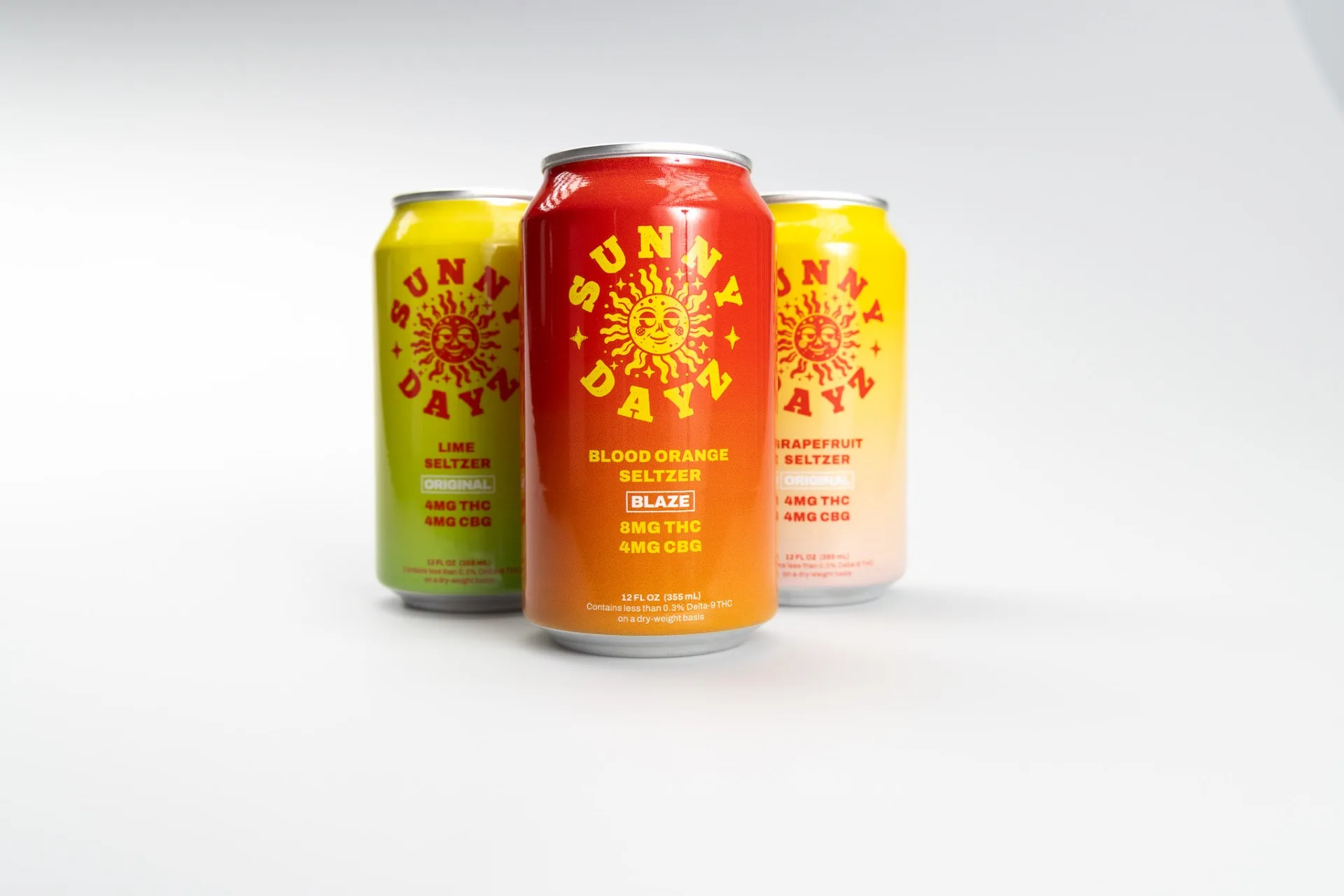
Low-dose hemp-derived THC beverages, under the same kind of rules that put beer there. The mainstream shelf has requirements: a trusted format, a predictable dose, professional packaging, and a licensed supply chain the retailer can stand behind. A single-digit-milligram hemp-derived THC beverage in a 12-ounce can meets all of them. That is why national alcohol distributors and large retailers lined up behind the Lawful Hemp Protection Act, which would route hemp-derived THC beverages through the alcohol industry's three-tier distribution system with a federal purchase age of 21.
The restaurant case follows the same logic. A restaurant can list a hemp-derived THC beverage next to the beer list because it arrives through a licensed distributor in a sealed, labeled, dose-marked can. No restaurant is going to hand-roll that infrastructure for loose flower, and no regulator would let it.
What stays in the dispensary?
Everything the mainstream shelf cannot carry, which is most of the cannabis product universe. Flower, pre-rolls, vapes and other inhalables, concentrates, and high-dose edibles belong in state-licensed dispensaries, sold by staff who can explain them, to customers who came specifically for them. You will not see a pre-roll on the menu at Red Robin or a 100 milligram gummy on the shelf at Costco, and you should not. Those products are built for an informed, deliberate purchase in a specialized store, exactly the way a cask-strength whiskey is.
That is not a knock on dispensary products. It is a channel fact. Specialized products thrive in specialized retail, and they suffer in mainstream retail, where the buyer has thirty seconds and no budtender.
Why won't dispensaries disappear?
Because the high-potency customer is real, loyal, and growing in number. State-licensed cannabis is an established, multibillion-dollar retail sector with its own regulations, tax structures, and customer base, and the research shows how substantial that customer base has become. A study in the journal Addiction found 17.7 million daily or near-daily cannabis users in 2022, outnumbering daily or near-daily drinkers for the first time. In that same data, past-month cannabis consumers were almost four times as likely as drinkers to report daily or near-daily use, 42.3 percent versus 10.9 percent.
That is a high-frequency population, and high-frequency consumers are precisely who dispensaries are built to serve. Nothing about a 5 milligram seltzer on a supermarket shelf competes for them. If anything, the size of that group is the clearest evidence that the deep channel is permanent.
Where does the beer and liquor analogy break down?
At availability, and it is worth being honest about it. Liquor is more accessible than dispensary cannabis will likely ever be. Plenty of states sell spirits in grocery stores, nearly every restaurant with a license pours them, and no one needs a dedicated store to buy a bottle of vodka. Dispensary cannabis, by contrast, is likely to remain confined to dedicated licensed retail in the states that allow it, with no restaurant service and no supermarket presence. So the analogy overstates how available the high-potency channel will be.
The direction of the comparison still holds. The lower-potency format wins the wide channel, the higher-potency format holds the deep channel, and the customer moves between them based on the occasion. That was true of alcohol in 1935 and it is true of this plant now.
What is the cannabis industry's actual complaint?
That we sell the same molecule and do not pay the same price to sell it. I want to state that complaint fairly before I answer it, because I have watched too many people in my industry pretend it is not real.
A state-licensed cannabis operator pays application and licensing fees that can run into six figures, funds state tracking systems, carries state excise taxes, cannot advertise on most platforms, and cannot ship across state lines. On top of that, adult-use operators still cannot deduct ordinary business expenses under Section 280E, because adult-use marijuana is still Schedule I. The April 2026 order that moved marijuana to Schedule III covered FDA-approved drug products and state-licensed medical marijuana only. The broader question, whether adult-use moves too, went to an administrative hearing that closed July 15 after eleven days of testimony. Post-hearing briefs were filed August 17. It now sits with an administrative law judge who will make a recommendation to the DEA Administrator on no announced timeline.
So a dispensary operator in an adult-use state is carrying a tax penalty today, with no date on when it lifts and no guarantee that it will. Meanwhile I sell a can of hemp-derived THC seltzer to a grocery store through a distributor and carry almost none of that.
When they say it is unfair, they are describing something accurate. I am not going to insult them by pretending otherwise.
Where I part ways is on the conclusion. Their answer is to shut us down. Mine is to make us pay.
Put hemp-derived THC beverages under the Alcohol and Tobacco Tax and Trade Bureau, exactly the way the Lawful Hemp Protection Act proposes. Make us hold federal permits. Route us through licensed three-tier distribution so a distributor and a retailer both have their license on the line next to mine. Require 21-plus with real age verification, testing and labeling standards, US-grown sourcing, and a hard ban on synthetic cannabinoids.
And tax us. The bill sets an excise tax of 5 cents per milligram of THC on hemp-derived beverages, plus a 5 percent tax on manufacturer sales revenue. On an 8 milligram can that is forty cents a can before the revenue tax, and close to ten dollars on a case. I would rather pay that than keep operating in a category that any appropriations rider can erase.
That is not a generous offer. It is self-interest, and it is also the only position I think is defensible. A market that exists because of a drafting accident is a market that can be legislated out of existence in a single sentence, and in November 2025 it nearly was. The asymmetry the cannabis industry resents is the same asymmetry that makes my business fragile. Closing it protects both of us.
So I would rather stand next to a dispensary operator arguing for sane rules than stand across from one arguing about who deserves to exist. We are not on opposite sides of this. We are on opposite ends of the same shelf, and the people writing the rules do not much care which of us they take down first.
I would rather be regulated like beer than be legal by accident.
What decides which products end up in which channel?
Regulation, and the decision is being made right now. The Lawful Hemp Protection Act would draw the line in federal law: hemp-derived THC beverages move through licensed alcohol-style distribution to mainstream carded retail, while states continue to run dispensary programs for everything stronger.
Meanwhile a separate federal provision effectively bans most hemp-derived THC products. It was originally set to take effect November 12, 2026. On August 8, 2026 the Senate passed a funding bill that would push most of that change to December 11, though it is not law until the House passes it and the President signs it. Either way, if Congress lets the ban land without a framework behind it, the result would not send those customers to dispensaries so much as strand them entirely in the states without them.
Two channels, one plant, clear rules for each. Beer and liquor figured this out ninety years ago. Congress just has to let this plant do the same.
About the author. Robert Dunn is co-founder and chief operating officer of Sunny Bev LLC, a Nevada-based beverage company whose brands include Sunny Dayz, a hemp-derived THC beverage line. He works directly with congressional offices on federal regulation of hemp-derived THC beverages. His products would be regulated, taxed, and distributed under the legislation discussed here.
Sources Lawful Hemp Protection Act, H.R. 9830, bill text including the excise tax provision: https://www.congress.gov/bill/119th-congress/house-bill/9830/text/ih Rep. Barr introduction release with supporting coalition, July 22, 2026: https://barr.house.gov/2026/7/barr-introduces-lawful-hemp-protection-act-to-protect-kentucky-farmers-consumers-and-the-future-of-the-hemp-industry Sen. Klobuchar release on the December 11 delay: https://www.klobuchar.senate.gov/public/index.cfm/2026/8/klobuchar-hemp-ban-delay-included-in-senate-budget-bill Congressional Research Service on the November 12, 2026 hemp provision: https://www.congress.gov/crs-product/IF13136 DOJ announcement on marijuana rescheduling, April 2026: https://www.justice.gov/opa/pr/justice-department-places-fda-approved-marijuana-products-and-products-containing-marijuana DEA marijuana rescheduling regulatory actions: https://www.dea.gov/marijuana-rescheduling-regulatory-actions Caulkins, J.P. (2024), "Changes in self-reported cannabis use in the United States from 1979 to 2022," Addiction: https://onlinelibrary.wiley.com/doi/10.1111/add.16519